Remembering Our War Heroes
Not only those killed in action, but all who served and survived.
The Crimean War (1853–1856)
The Crimean War was a major conflict fought between the Russian Empire and an alliance of the Ottoman Empire, Britain, France, and Sardinia-Piedmont. It took place mainly on the Crimean Peninsula, but fighting also occurred in the Black Sea and the Balkans. The war was caused by long-standing tensions over the decline of the Ottoman Empire, known as the Eastern Question, as well as rivalry between the great European powers. Russia claimed the right to protect Orthodox Christians in Ottoman territory, which alarmed Britain and France, who feared Russian expansion would upset the balance of power in Europe.
The most important military campaign was the Siege of Sevastopol (1854–1855), where Allied forces attempted to capture Russia’s main naval base in the Black Sea. The siege involved trench warfare, heavy artillery, and extremely high casualties, many caused not by fighting but by disease and poor conditions. One of the war’s most famous events was the Charge of the Light Brigade at the Battle of Balaclava in 1854, when British cavalry mistakenly charged well-defended Russian guns, suffering heavy losses due to poor leadership and unclear orders.
The war is also remembered for its social impact. Florence Nightingale improved sanitation in military hospitals, greatly reducing death rates and helping to establish modern nursing. Public reporting of the war exposed military mismanagement and led to reforms.
The conflict ended with the Treaty of Paris (1856), which limited Russian power in the Black Sea and guaranteed the independence of the Ottoman Empire, marking an important shift towards modern warfare and public accountability.
James Bunnell (1819 - 17 October 1865) - Medical Discharge
War In Crete 1905 (Theriso revolt)
The Theriso Revolt was a pivotal insurrection on the island of Crete, led by the charismatic statesman Eleftherios Venizelos. It aimed to challenge the autocratic rule of Prince George of Greece (the High Commissioner of the Cretan State) and accelerate Enosis—the unification of Crete with the Kingdom of Greece.
Political Conflict: Venizelos, a former counselor to the Prince, grew disillusioned with George’s authoritarianism and lack of diplomatic progress toward unification.
On March 10, 1905, Venizelos and roughly 1,000 insurgents gathered in the village of Theriso, declaring the island's political union with Greece as a single free constitutional state.
While the Great Powers (Britain, France, Russia, and Italy) initially opposed the movement to maintain regional stability, they eventually realized Prince George had lost his mandate. By 1906, the Prince resigned, and a new constitution was drafted under a Greek successor, Alexandros Zaimis.
Although formal Enosis was delayed until 1913, the revolt solidified Venizelos’s status as a national leader and proved that the "Cretan Question" could no longer be ignored by European diplomacy. It effectively marked the beginning of the end for Ottoman suzerainty over the island.
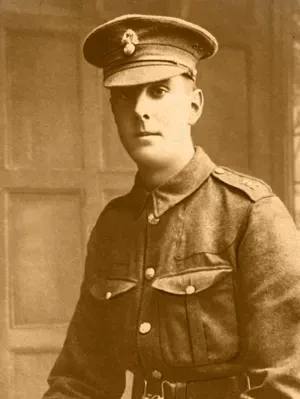
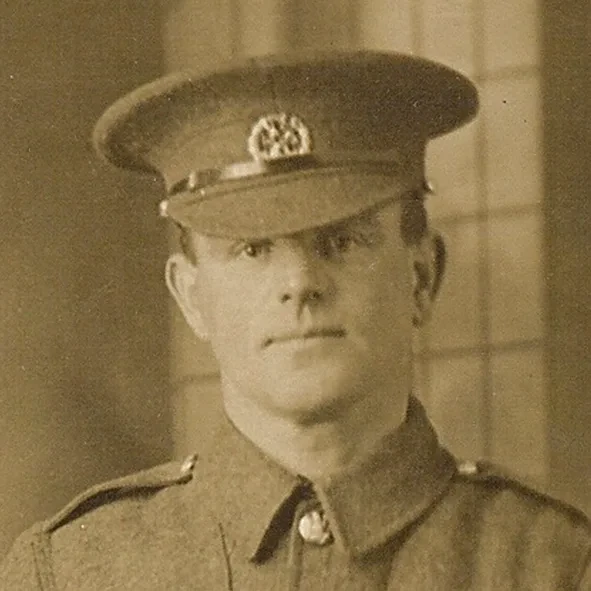
William George Budd (26 Oct 1883 - 8 Jul 1905 ) - Killed In Action
World War 1 (The Great War)
World War I, often called the Great War, was a worldwide conflict that took place between July 1914 and November 1918. It began after the assassination of Archduke Franz Ferdinand of Austria-Hungary, an event that set off a chain reaction among European powers already strained by militarism, imperial rivalry, nationalism, and a complex web of alliances. These tensions quickly escalated into a large-scale war involving many countries across Europe and beyond.
The conflict was fought mainly between the Allied Powers, including Great Britain, France, Russia, Italy, and later the United States, and the Central Powers, led by Germany, Austria-Hungary, and the Ottoman Empire. On the Western Front, fighting became deadlocked in long systems of trenches, where soldiers endured harsh conditions and heavy casualties for little territorial gain.
The war marked the first major industrialised conflict, with the widespread use of new technologies such as machine guns, tanks, submarines, aircraft, and chemical weapons. Entire societies were drawn into the war effort, as governments mobilised economies and civilian populations, leading to significant social change, including greater roles for women in industry.
The war ended in 1918 and was followed by the Treaty of Versailles in 1919, which reshaped national borders and dismantled several empires. However, the treaty’s harsh treatment of Germany created resentment and instability. With over 16 million military and civilian deaths, World War I left deep political and social consequences that contributed directly to the outbreak of World War II.
Frederick William Kingsland (24 Jun 1895 - 2 Feb 1917) - Killed In Action
John Francis Budd (9 Nov 1894 - 25 Oct 1979) - Taken Prisoner and Sent to Stendal POW Camp, Germany - Survived
Frank Finden (6 Dec 1879 - 7 Oct 1916) - Killed In Action
World War 2 
World War II was a global conflict that lasted from September 1939 to September 1945 and involved most of the world’s nations. It began when Nazi Germany, under Adolf Hitler, invaded Poland, leading Britain and France to declare war. The conflict developed from unresolved problems left by World War I, the harsh terms of the Treaty of Versailles, the worldwide economic depression, and the rise of aggressive, expansionist ideologies such as fascism in Germany and Italy and militarism in Japan.
The war was fought between the Allied Powers, including Great Britain, the Soviet Union, the United States, France, and China, and the Axis Powers, led by Germany, Italy, and Japan. Fighting took place across Europe, North Africa, the Soviet Union, and the Pacific, making it a truly global war. New forms of warfare were used, such as Blitzkrieg tactics, strategic bombing of cities, and advanced technologies including radar, aircraft carriers, rockets, and, ultimately, atomic weapons. Civilians were heavily affected, and the conflict included the Holocaust, in which six million Jews were systematically murdered by the Nazi regime.
World War II ended in 1945 with the defeat of Germany and Japan. Around 70–85 million people lost their lives, making it the deadliest war in history, and its aftermath reshaped global politics, leading to the Cold War and the creation of the United Nations.