
The Haybittle Brothers: A Chronicle of Survival and Exile
By Phillip Kingsland-Budd
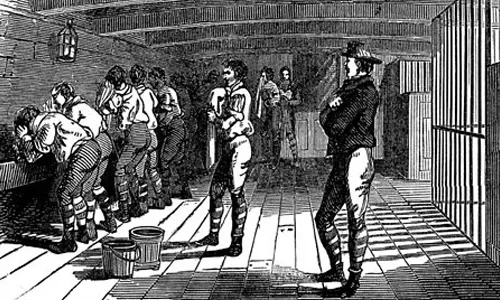 The story of the Haybittle family is a poignant illustration of the hardships faced by the Victorian working class. Born in Betchworth, Surrey, my 2nd great-granduncles, James, Alfred, and Frederick lived through an era of immense social upheaval. Following the early loss of their mother in 1845 and their father in 1848, the brothers fell into a cycle of poverty and recidivism that eventually scattered the family from the English countryside to the penal colonies of Australia.
James Haybittle (b. 1817): The Eldest Brother
James was the first of the brothers to face the high courts. In a dramatic start to the family's legal history, James (age 28) and Alfred (age 21) were indicted for Arson on Christmas Day, 1845. They were accused of setting fire to a haystack belonging to the Right Hon. Henry Goulburn.
The trial at the Surrey Assizes in March 1846 revealed a desperate scene; the brothers turned on each other in court, each claiming the other was the "guilty party". Due to a lack of physical evidence, the jury returned a verdict of Not Guilty. While James largely avoided the heavy sentences of his younger brothers, his struggles continued into old age. In 1873, at age 55, he was sentenced to 12 months for a fire-related offense in a stackyard—an eerie echo of the charges he faced 27 years earlier.
Alfred Haybittle (1822–1865): The Wanderer
Alfred’s life was marked by a persistent attempt to outrun his reputation. Between 1849 and 1853, he moved through Surrey, Sussex, and Kent, frequently using the alias "Thomas Miller" to hide his growing record.
- The Turning Point: After serving six months for larceny in 1849, Alfred was sentenced to 10 years of Penal Servitude in 1853.
- Transportation: In 1863, while still under his previous sentence, he received an additional six years for larceny. This led to his ultimate exile. On June 29, 1864, Alfred was transported to the Swan River Colony (Western Australia).
- The Final Chapter: Alfred arrived in Fremantle as convict number 8022. His time in Australia was tragically short; he died in Fremantle in 1865 at the age of 43, only a year after his arrival.
Frederick Haybittle (b. 1827): The Youngest Offender
Frederick followed a similar path to his brother Alfred. In 1849, the two were convicted together for stealing shoes and clothing, resulting in a six-month sentence of hard labor at Brixton. Frederick’s crimes often involved the theft of basic necessities, such as bread, bacon, and butter.
In January 1853, Frederick was convicted of "Larceny after previous conviction" and sentenced to 7 years of transportation. Records show him being transferred to the "Warrior" hulk at Woolwich—a notorious floating prison—in April 1853 to await his removal from England.
Summary of Sentencing
The Haybittle name remains a significant part of Betchworth's history, with family research preserved in local archives spanning over 200 years. While their lives were defined by conflict with the law, their journey from Surrey laborers to colonial convicts provides a vital window into the pressures of 19th-century survival.
Research Note: It is rare to find a family where three brothers are so extensively documented. Their story is a testament to the harsh "Bloody Code" of Victorian England and the lengths to which families went to survive after the loss of their parents.